Designing strategies for stories to make an impact
The right strategy decides whether a story lands. A few that did.
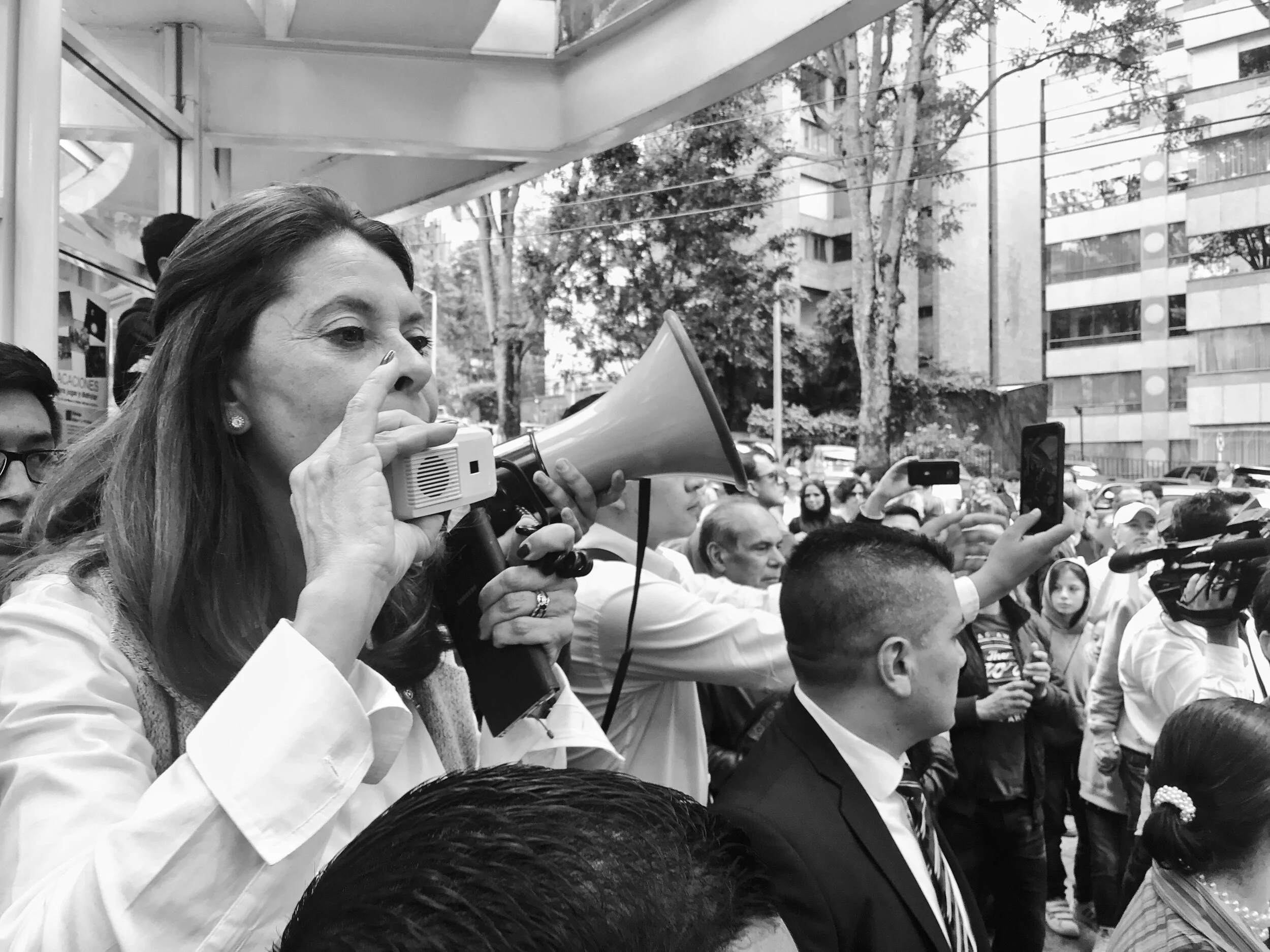
Electing the first woman Vice President of Colombia
Colombia's 2018 primary was structured to select a single opposition nominee from a multi-candidate coalition, requiring the campaign to run a compressed, high-variance race against several rivals at once.
As Coordinator of Communications and second-in-command on the team, ran the daily communications operation from inside the war room, supervising ad and media agencies, directing digital and press teams, and writing bilingual press releases, speeches, and internal communications for donors, volunteers, staff, and the candidate herself.
Result: 1.5M+ primary votes, confirming Marta Lucía Ramírez as the vice-presidential nominee. She went on to become the first woman in Colombian history to hold that office. The central challenge was keeping dozens of stakeholders, agencies, press, volunteers, and donors, working from the same facts in real time, under a compressed election calendar.
COVID-19 Vaccine Education Campaign (YouTube × Vaccine Confidence Project)
YouTube partnered with the Vaccine Confidence Project at the London School of Hygiene and Tropical Medicine on an organic campaign aimed at 18 to 30 year olds during the most volatile months of the pandemic. The goal was to make credible vaccine information compete on its own terms with the entertainment content Gen Z was already watching on the platform, using animation, pop culture references, and relatable characters instead of the traditional public-service-announcement format. Coordinated Legal, Communications, and Policy internally to keep content moving quickly without sacrificing medical accuracy, while partnering externally with VCP's scientific team. Result: 48M+ organic impressions. The campaign was one of the first attempts to treat public health content as a creative and format problem, not just a distribution problem, competing for attention using the same storytelling tools as organic entertainment rather than looking like an ad.

Fighting for women’s reproductive rights in Honduras
In 2009, Honduras became the only country in Latin America to ban emergency contraception outright. A decade later, Hablemos Lo Que Es ("Let's Call It What It Is") set out to change that by building a fact-based community first and mobilizing it second, given the risk of backlash in a conservative media environment. Led the digital outreach strategy: building an online community to counter disinformation with educational content, then converting that community into an organized petition campaign. Over six months, the campaign built a 3,000+ person community across social platforms and collected 5,000+ signatures demanding the government overturn the ban, while on-the-ground partners ran rallies and livestreamed panel discussions.